Why Seoraksan
Why Seoraksan
Korea's granite showpiece
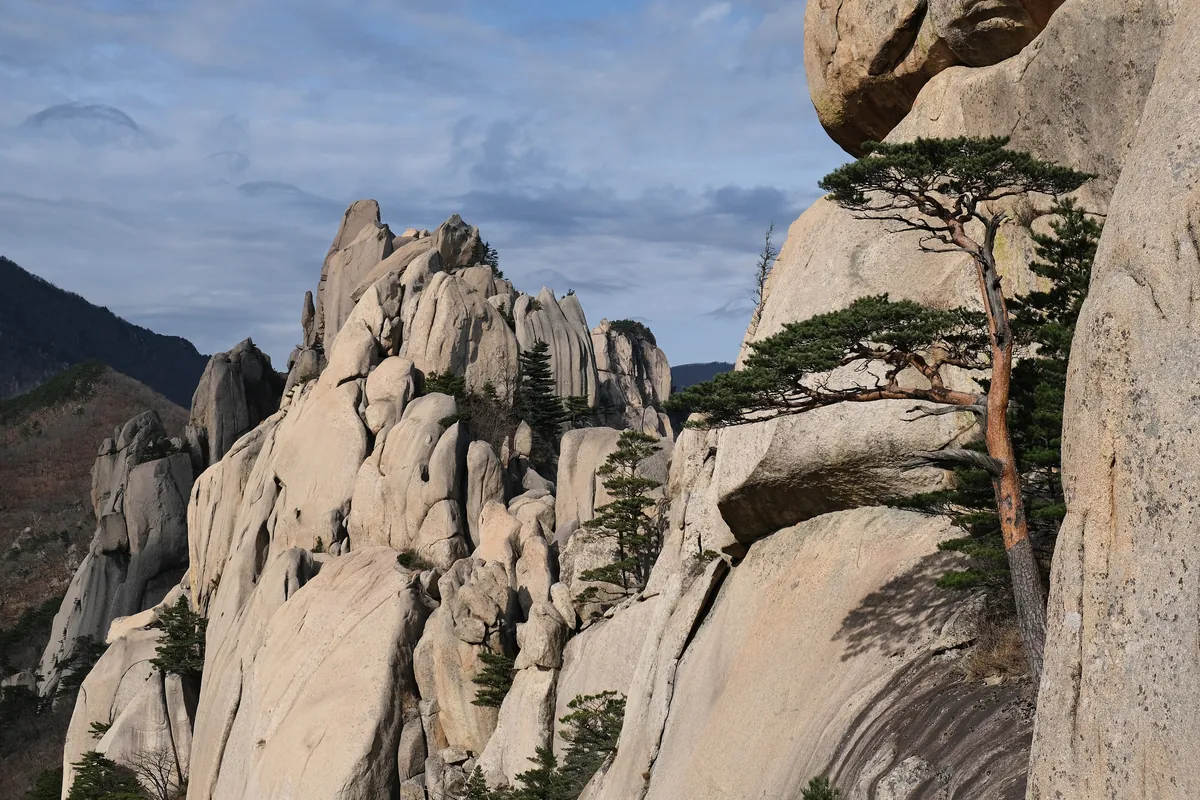
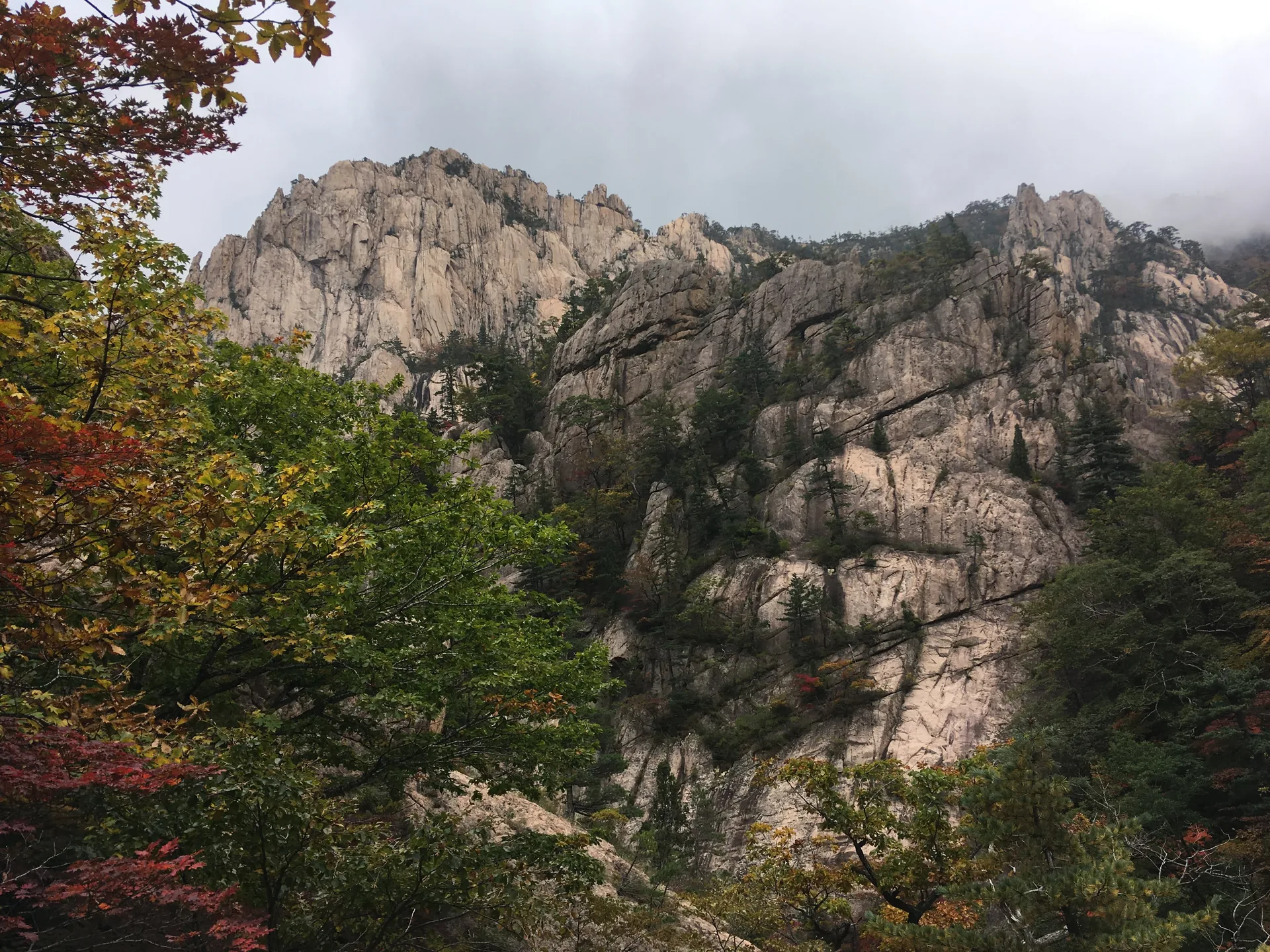
Seoraksan is South Korea's premier granite-peak national park — a UNESCO Biosphere Reserve of spires, ridgelines, forested valleys and waterfalls rising near the east-coast city of Sokcho. Its highest peak, Daecheongbong, tops out at 1,708 metres, the third-highest in the country. The name itself evokes the pale rock: 'Seorak' reads as snow-white stone. It is, simply, the mountain Koreans travel to when they want mountains.
The country's most famous autumn
More than any other peak, Seoraksan is where Korea watches the leaves turn. It is one of the first places in the country to colour each year — the change starts high on Daecheongbong in late September and cascades down to the valleys by around the 20th of October. For a few weeks the granite is set against crimson and gold, and the whole country, it can feel, drives up to see it.
Mountain and sea in one day
What makes it work as a day trip is geography: the Seoul–Yangyang Expressway, tunnelled straight through the mountains, put 1,708-metre granite and the blue East Sea within about two and a half hours of the capital. You can ride a cable car to a fortress ridge in the morning and stand beneath a seaside Goddess of Mercy over the ocean in the afternoon — a genuine mountain-to-sea day out of Seoul.
Your day, two ways
Your day, two ways
One entrance, two completely different days. Be honest with yourself about which one you're here for — it decides everything, including whether a tour suits you.
Cable car, temple & an easy valley walk
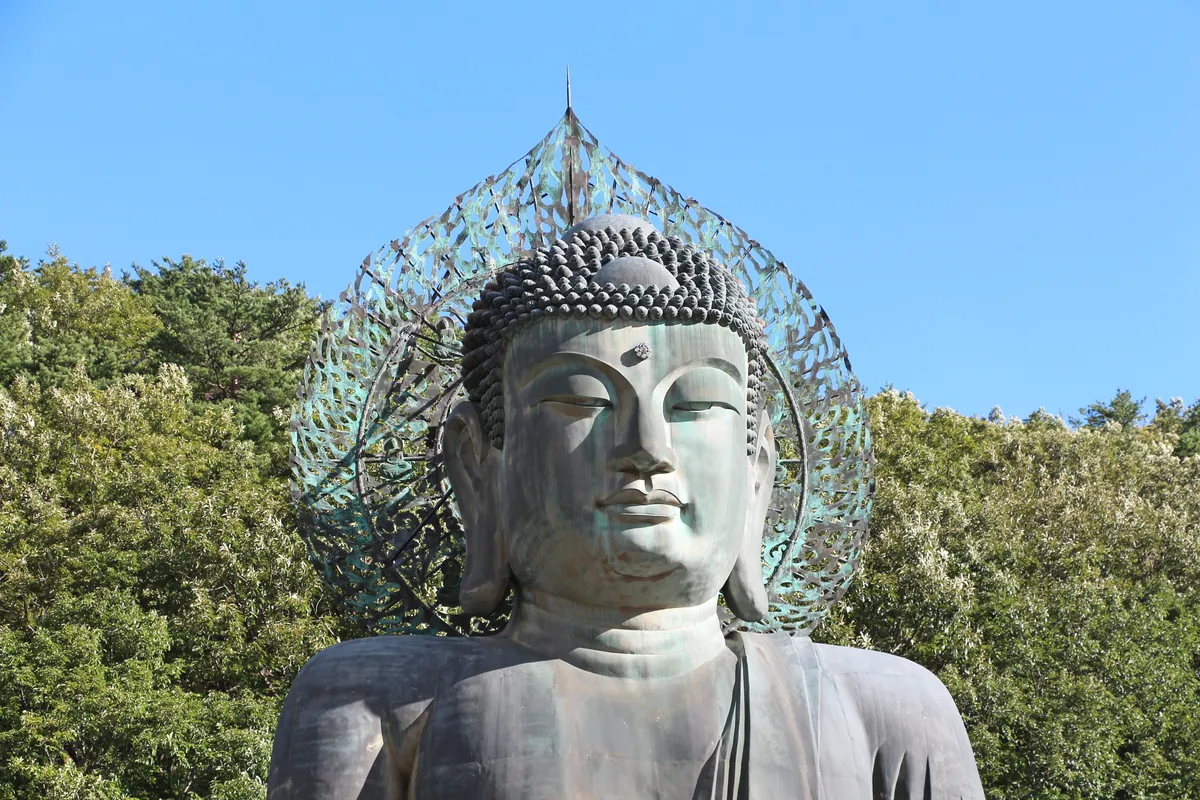
Ride the cable car ten minutes up to the Gwongeumseong fortress ridge for a sweep over Ulsanbawi, Sokcho and the East Sea; stand beneath the giant bronze Great Unification Buddha at Sinheungsa Temple; and stroll a flat valley path to Biseondae rock or the waterfalls. It suits almost anyone, takes about half a day on the ground, and it's exactly what a packaged day tour delivers.
The 808 steps up Ulsanbawi
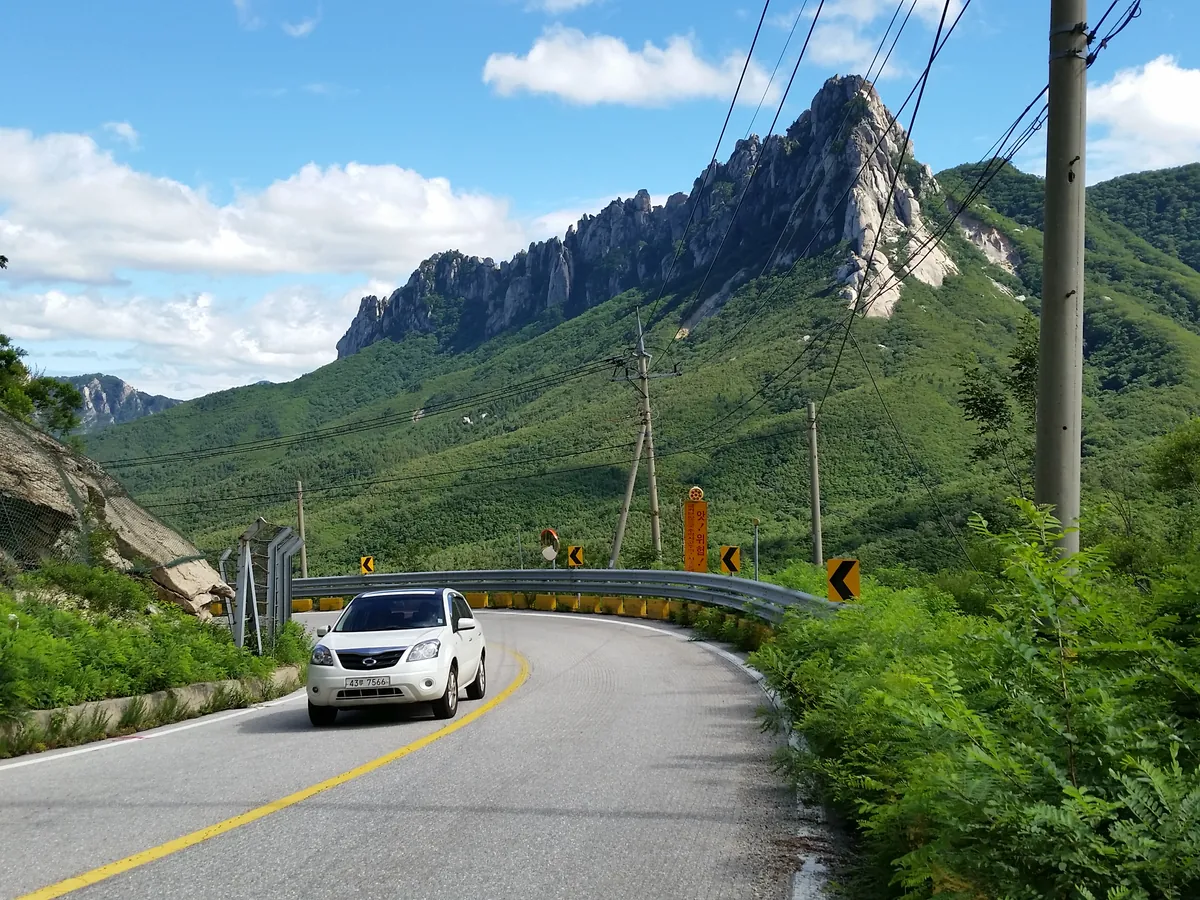
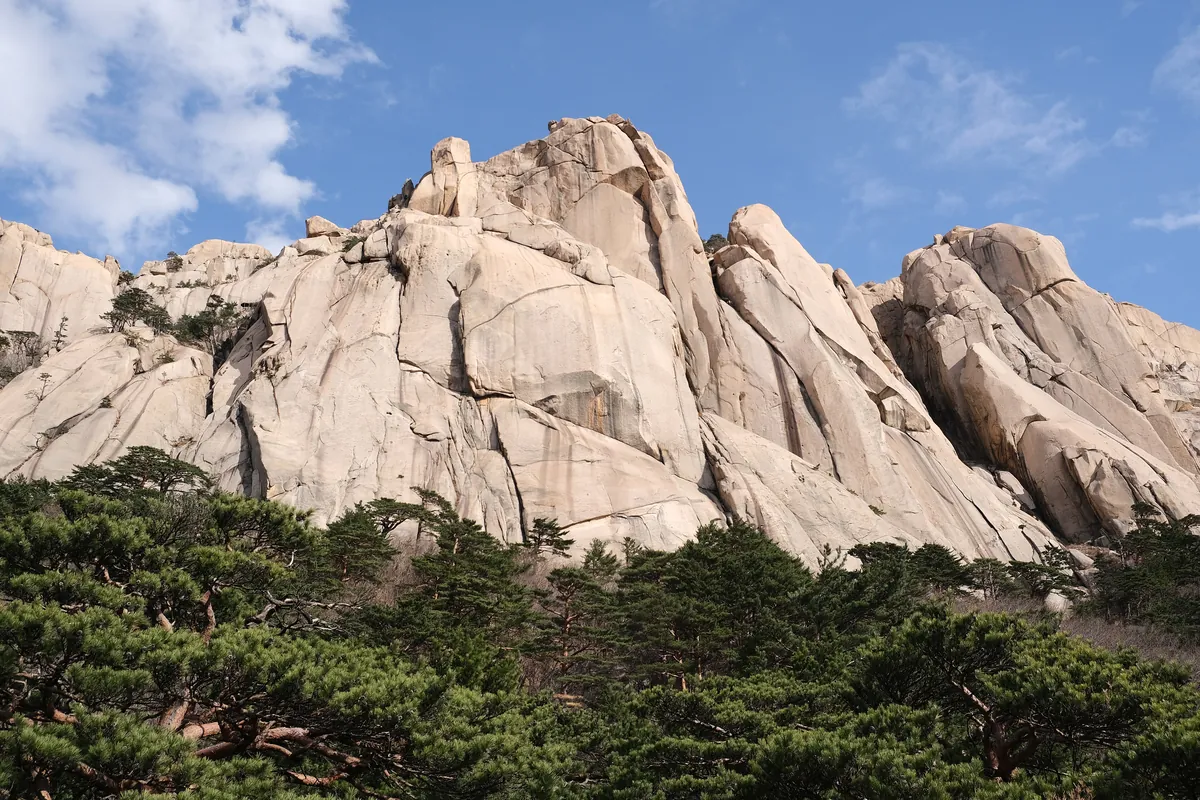
Or you climb Ulsanbawi — a cluster of six granite peaks whose final ascent is some 808 steel steps bolted to the bare rock, about four kilometres and 60–90 minutes of real cardio each way. The view from the top is the park's finest, but it needs a full, unhurried day and reasonable fitness — which is why it's a do-it-yourself trip, not a group-tour stop.